The full rainwater guide
Sizing, first flush, algae, freeze protection and Texas law.
Product 06 · The fun one
A tote that can no longer carry product can still carry rain, soil, fish or hand-wash water for another twenty years. Our fabrication bay turns C-grade units into things people actually want, and it is the most satisfying corner of the yard.
Order desk
Quantity and delivery ZIP are what move the price. Tell us those and the grade you think you need, and we will confirm or talk you down to something cheaper.
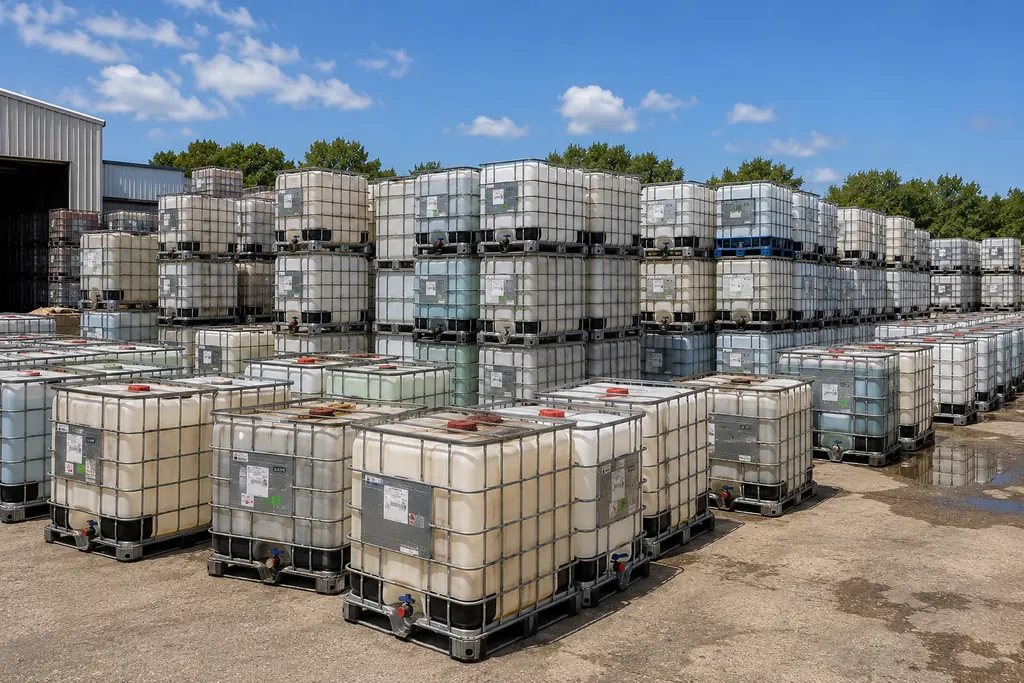
We build finished products from totes that have exhausted their commercial life: rainwater harvesting systems with first-flush diversion and overflow, raised planters and wicking beds, aquaponics grow systems, portable wash and hand-sanitation stations, and evaporative cooler bodies. Builds run $240–$1,450 depending on plumbing, framing and finish, and all of them are made from containers that would otherwise be granulated.
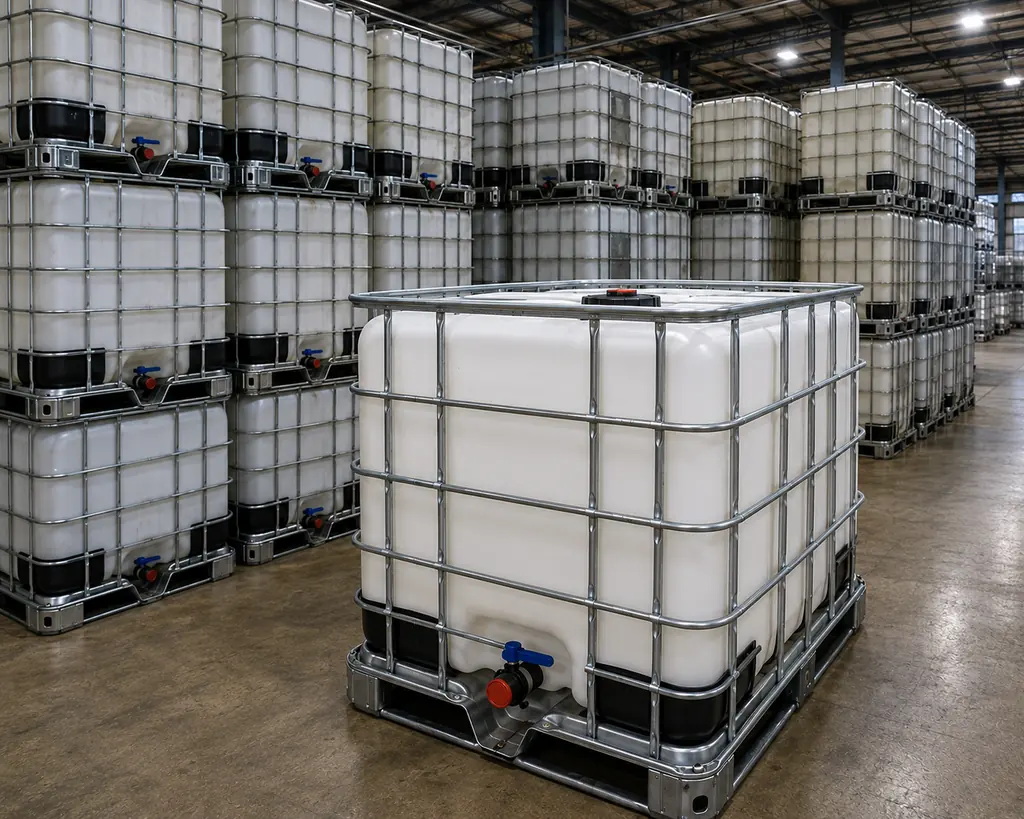
Central Texas gets its annual rainfall in a handful of violent events, which makes storage volume worth far more here than it is in a temperate climate. A 275 gallon tote fills from about 450 square feet of roof in a one-inch rain. Two totes on a modest house roof will carry a vegetable garden through most of a dry August.
Cut a tote to two-thirds height, keep the cage as the frame, line the reservoir, add a fill tube and an overflow, and you have a self-watering bed that holds 40 gallons of reserve under the root zone. In an Austin July, a wicking bed needs topping up once a week instead of twice a day. It is the single most water-efficient way to grow vegetables in this climate.
A standard pairing is one tote cut lengthways as a media grow bed sitting above an intact tote acting as the fish tank and sump. We fit bulkheads, a bell siphon for flood-and-drain cycling, and a cage-mounted frame so the whole assembly is rigid. Use an A-grade food tote for anything with fish in it — livestock deserve the same provenance standard as food.
We will not sell a C-grade or unknown-history tote for edible growing, and you should not buy one from anyone who will. Soil contact plus root uptake plus unknown prior contents is a genuinely bad combination. Ornamentals, fine. Tomatoes, no.
?Common questions
Not from these builds. Roof-collected rainwater needs filtration and disinfection to be potable, and the tote is only one part of that system. Our rain builds are specified for irrigation, wash-down, livestock and emergency non-potable use. If you want a potable system, we will build one on a new bottle with NSF-listed components — different product, different price.
About 450 square feet of roof gives you roughly 275 gallons per inch of rainfall, allowing for realistic losses. Austin averages around 34 inches a year, so that same roof theoretically yields close to 9,000 gallons annually — the constraint is never rainfall, it is storage on the day it falls.
We deliver anywhere we run trucks and we will set and link a multi-tote array on a prepared pad. We do not do roof plumbing or anything that touches a building's potable system — that is a licensed plumber's job and we will say so.
Yes. Send a sketch on the quote form. Most of what leaves the fabrication bay started as a phone photo of something someone saw and wanted a better version of.
»Keep reading
Sizing, first flush, algae, freeze protection and Texas law.
Cutting, plumbing, manifolding and branding to your drawing.
Why growing food changes the grade you need.
One form, one human, one written quote. Totes to buy, totes to sell, a wash job, a recycling pickup — it all starts here.