Ready-built rain systems
Screened, diverted, linked and delivered.
Guide · Sustainability
Central Texas delivers its rain in short violent bursts and then withholds it for two months. That pattern makes storage volume the binding constraint, and an IBC tote is the cheapest large volume of storage money can buy.
Order desk
Reading this because you are working something out? Send it over. We answer questions from people who are not buying anything, and we do it in writing.
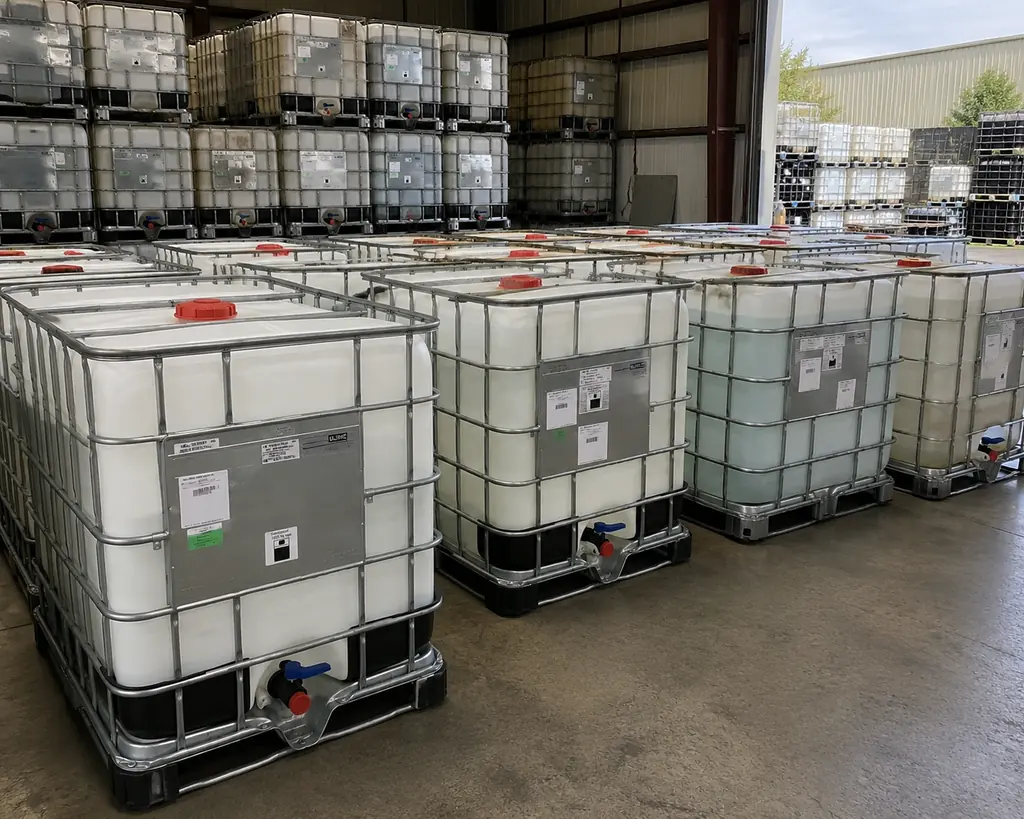
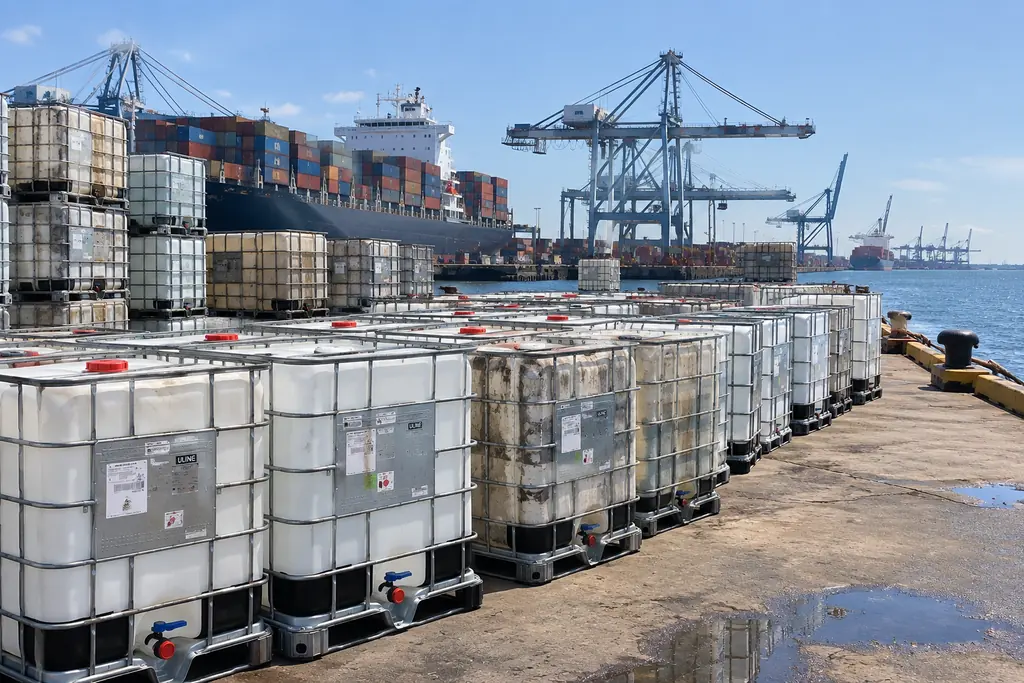
One inch of rain on 450 square feet of roof fills a 275 gallon tote, allowing for realistic losses. Build the system in this order: leaf screen, first-flush diverter, storage, overflow routed away from the foundation, then draw. Shade the bottle or algae is guaranteed. Link totes at the base so they equalise and you can draw from one point. Elevate for gravity pressure — every foot of height gives about 0.43 psi.
The collection formula is simple: roof area in square feet × rainfall in inches × 0.623 = gallons, then multiply by about 0.85 for real-world losses from splash, wind and first-flush diversion.
| Roof area | 1" rain | 2" rain | Austin annual (≈ 34") |
|---|---|---|---|
| 450 ft² | 238 gal | 477 gal | 8,100 gal |
| 900 ft² | 477 gal | 953 gal | 16,200 gal |
| 1,500 ft² | 794 gal | 1,588 gal | 27,000 gal |
| 2,400 ft² | 1,271 gal | 2,541 gal | 43,200 gal |
| 14,000 ft² (our roof) | 7,414 gal | 14,828 gal | 252,000 gal |
Look at the annual column and then at what you can actually store. A 1,500 square foot roof theoretically yields 27,000 gallons a year in Austin, and a two-tote array captures 550 gallons at a time. The constraint is never the rain. It is always the storage on the day it falls, which is why arrays beat single totes so decisively here.
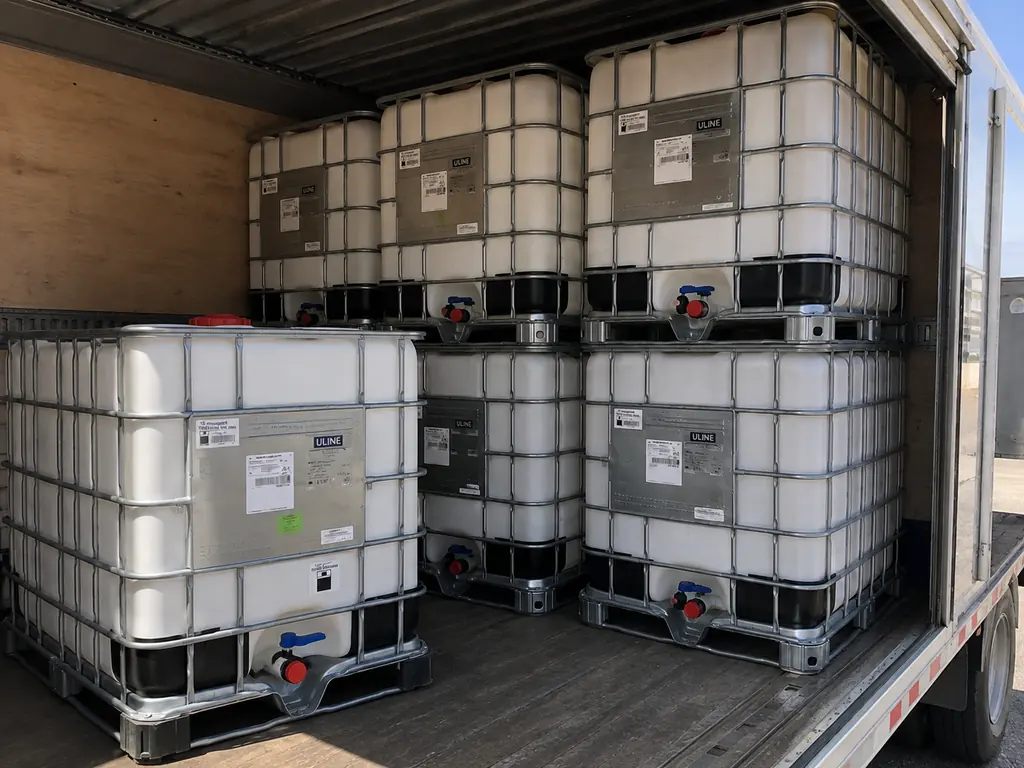
Bottom-linking is the standard approach: connect the outlets of adjacent totes with 2-inch pipe or hose so they behave as one vessel, and draw from a single tap at one end. Everything fills together, everything empties together, and you have one connection to maintain.
Every few years Central Texas gets a hard multi-day freeze, and rainwater systems designed for a mild climate fail all at once. A full tote will not freeze solid in a two-day event — the thermal mass is large — but the plumbing will, and the valve will, and the valve is the expensive part.
Texas is unusually supportive of rainwater harvesting. State law protects a property owner's right to harvest rainwater, restricts homeowners' associations from prohibiting systems outright (though they may regulate appearance), and exempts qualifying rainwater harvesting equipment from state sales tax when purchased for that purpose. Some municipalities and utilities offer rebates on top.
What that does not do is make roof-collected water potable, or exempt a system connected to a building's plumbing from plumbing code and backflow prevention requirements. Irrigation and outdoor use is straightforward. Anything crossing into the house is a licensed plumber's job. Ask us for the sales-tax exemption form with your order — most customers do not know it exists.
?Common questions
Work backwards from your dry-period demand, not your rainfall. A 400 square foot vegetable garden in an Austin summer needs roughly 250 gallons a week. Two totes carry you about two weeks; four carry you a month. Four is the number most serious growers here settle on.
Not without a designed treatment train — filtration and disinfection — and not from a general-purpose used tote. Potable rainwater systems are a real, legitimate thing in Texas, and they are built from purpose-specified components with a licensed plumber involved. Our rain builds are specified for irrigation, wash-down, livestock and emergency non-potable use.
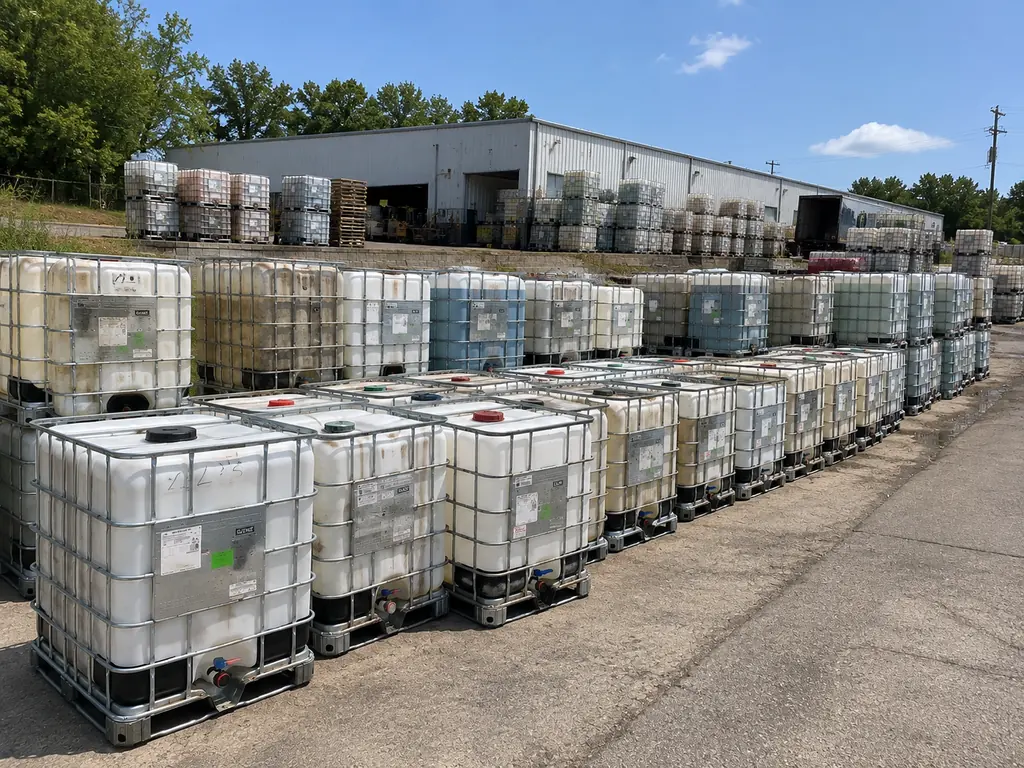
For ornamentals and lawns, C grade is fine and cheap. For a vegetable garden, insist on a known benign history — A or B grade. For livestock drinking water, treat it exactly like food: A grade with documented prior contents, or a rebottle.
Only if you give them an opening. Screen the inlet, screen the overflow, keep the lid sealed and the tote is closed to them. An open-top tote in Texas will breed mosquitoes within a week, guaranteed.
»Keep reading
Screened, diverted, linked and delivered.
What history is acceptable for garden water.
Our own array supplies a fifth of the wash line.
One form, one human, one written quote. Totes to buy, totes to sell, a wash job, a recycling pickup — it all starts here.