Food grade stock
Documented single-trip units.
Guide · Compliance
The resin is the same. The mould is the same. The factory is the same. The only thing that separates a food grade tote from an industrial one is what happened after it left that factory — and whether anyone wrote it down.
Order desk
Reading this because you are working something out? Send it over. We answer questions from people who are not buying anything, and we do it in writing.
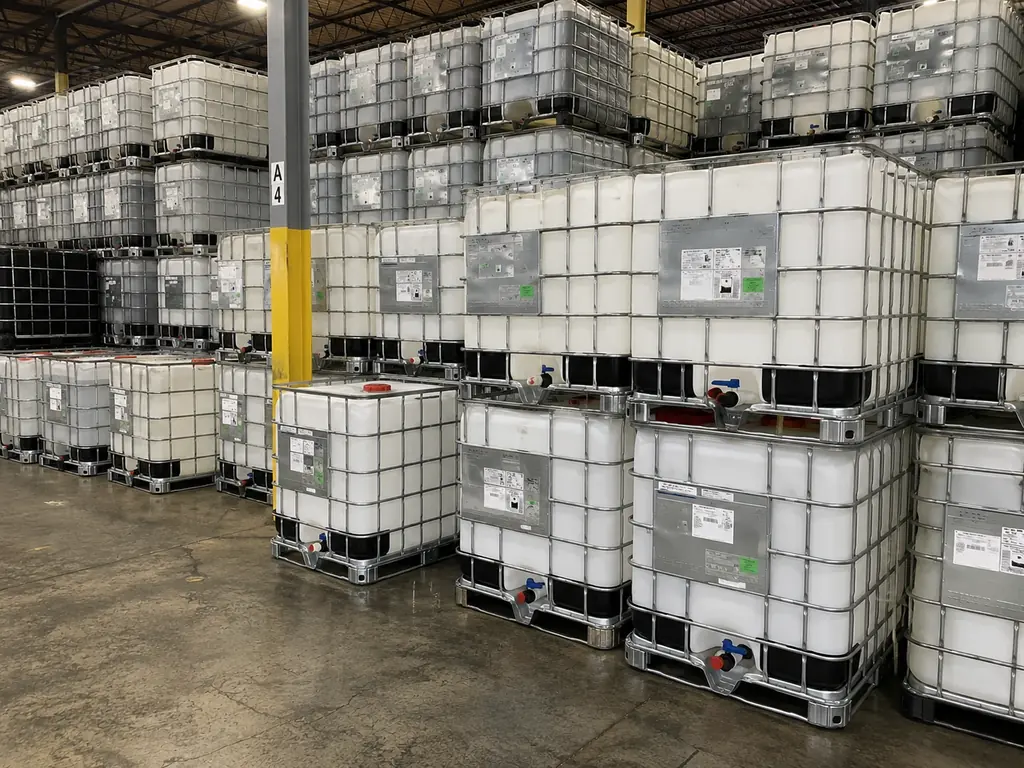
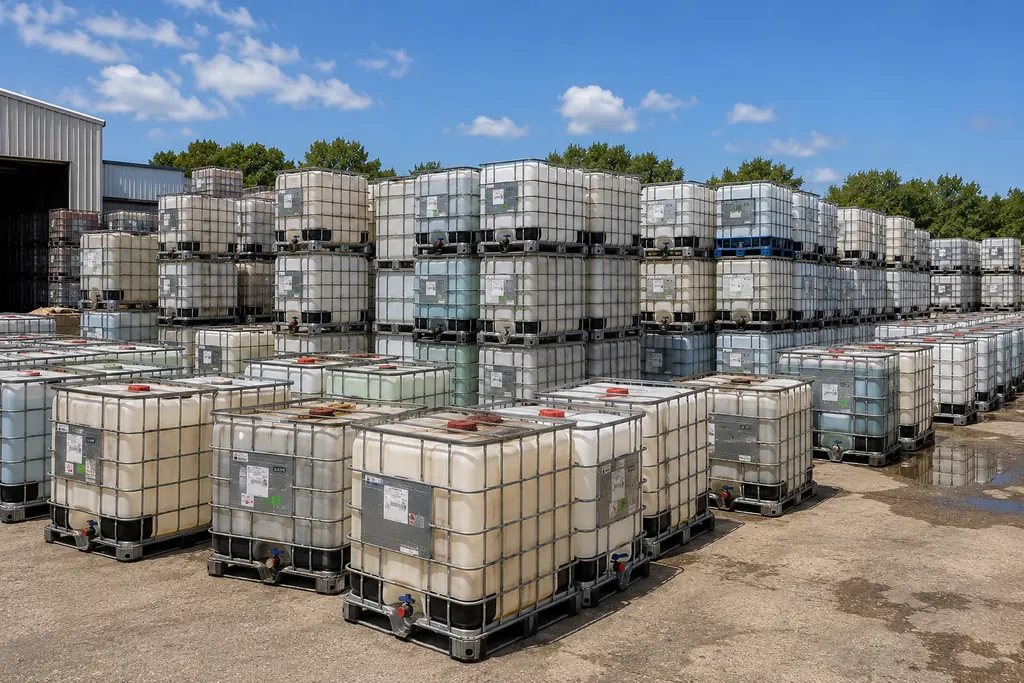
Both food grade and industrial IBC totes are made from the same FDA-compliant HDPE. The difference is service history: a food grade tote has had exactly one prior fill, that fill was an edible product, and there is documentation naming it. An industrial tote has held something non-edible, or has been filled multiple times, or has no documented history. No cleaning process converts the second category into the first.
HDPE is semi-crystalline and slightly permeable. Over months of contact, small molecules — solvents, fragrances, some surfactants — migrate into the amorphous regions of the polymer and stay there. Wash the surface and they migrate back out slowly over the following weeks, into whatever is now inside.
This is why a tote that held pine-scented cleaner still smells of it after three washes, and why that smell will reappear in your product. It is not dirt. It is absorption, and no wash cycle reaches it. The same mechanism is why gaskets are replaced rather than cleaned on any food unit.
You can clean a surface. You cannot clean a history.
| Application | Minimum grade | Why |
|---|---|---|
| Human food or beverage ingredient | A food, documented | Migration and audit trail |
| Livestock feed or drinking water | A food, documented | Same risk, same standard |
| Aquaponics with edible harvest | A food, documented | Root uptake is real |
| Potable water storage | Purpose-built potable | Needs NSF-listed components |
| Rainwater for edible garden | A or B, known history | Judgement call; know what was in it |
| Rainwater for ornamentals | B or C | Low risk |
| Cosmetics and personal care | A food or new | Audit expectations mirror food |
| Chemical blending | B industrial | Compatibility matters more than provenance |
| Wash water, dust suppression, ballast | C | Anything sound will do |
?Common questions
Yes — that is exactly what rebottling is, and it is the correct answer to this question. A new virgin bottle in a reclaimed cage gives you a container with no prior contents at all, because the only part that touches product is new.
It needs a prior-contents declaration naming the product, the shipper and the wash method. Whether that constitutes a "certificate" is semantics; whether your auditor accepts it is not. Ask your auditor what they want before you buy.
Black bottles are usually pigmented with carbon black and are generally specified for industrial or outdoor use rather than food contact. If you need UV protection on a food application, shade the tote rather than pigmenting it.
»Keep reading
Documented single-trip units.
A virgin interior at a used-tote price.
What washing can and cannot achieve.
One form, one human, one written quote. Totes to buy, totes to sell, a wash job, a recycling pickup — it all starts here.