Our published numbers
Diversion tonnage and the calculator behind it.
Guide · Sustainability
Follow one container from the blow-moulder to the granulator. Eighteen years, eight owners, four rebuilds and, at the end, ninety-six percent of it goes back into manufacturing. This is what circularity looks like when it is a business rather than a slogan.
Order desk
Reading this because you are working something out? Send it over. We answer questions from people who are not buying anything, and we do it in writing.
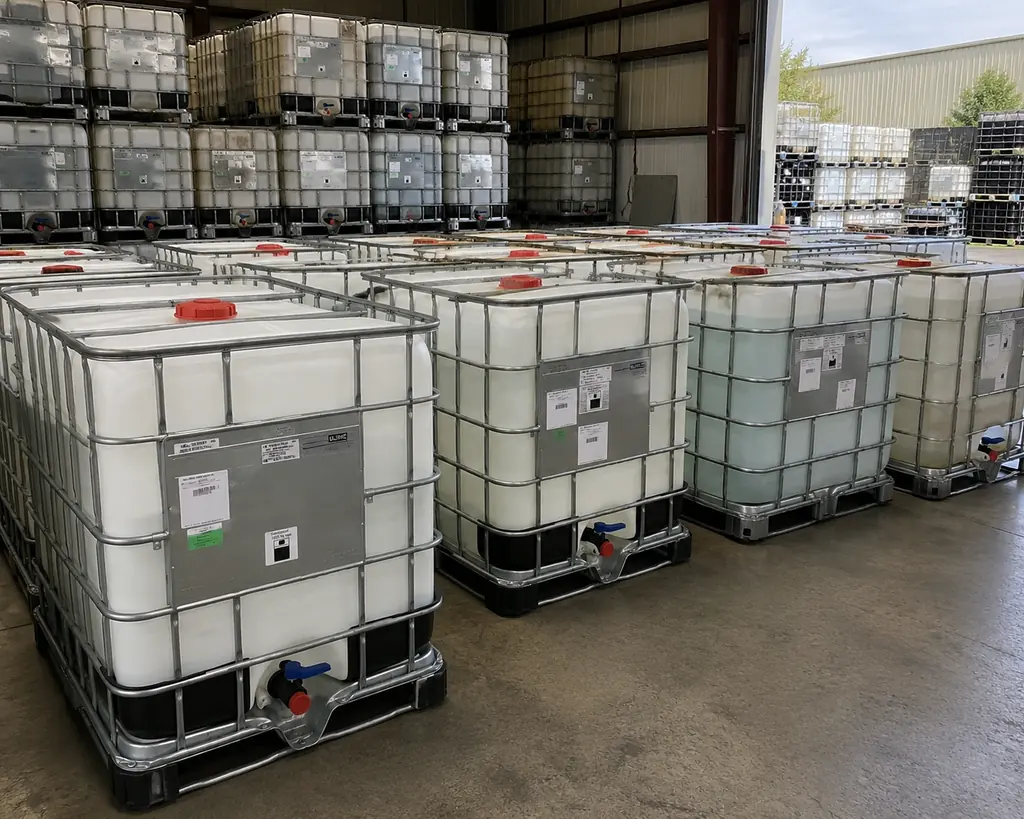
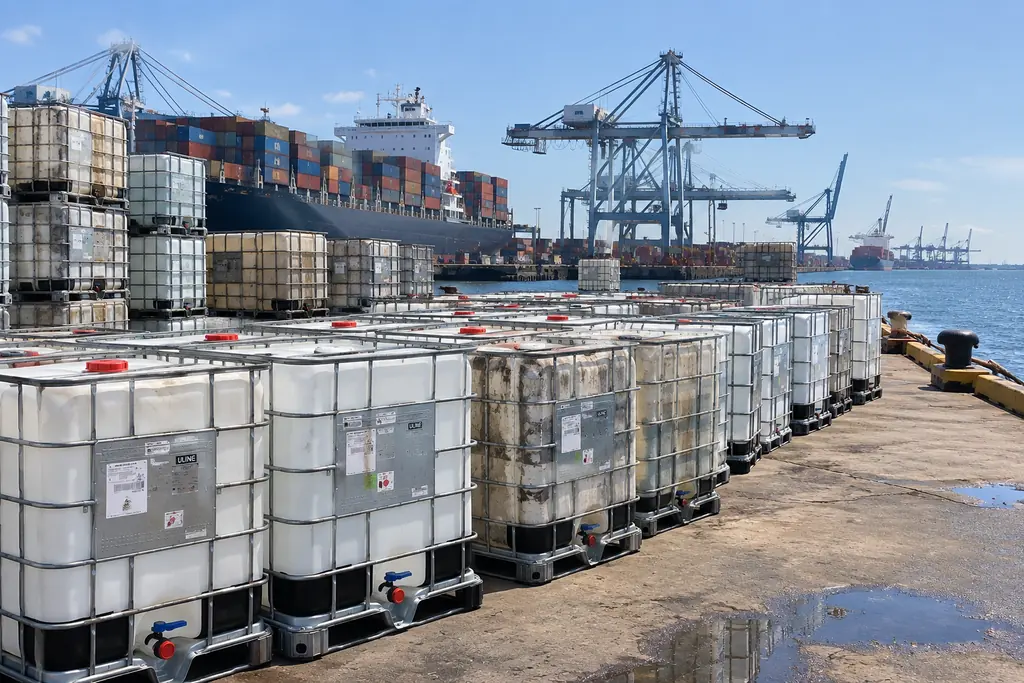
A well-managed IBC tote lives roughly 15–20 years across 4–8 service lives. The steel cage typically outlasts three or four bottles. At end of life about 96 % of the mass is recovered: the HDPE granulated into regrind for pipe and pallet manufacture, the steel baled to mill. Reuse avoids far more carbon than recycling does — a reconditioned tote carries about 12 % of the embodied emissions of a new one.
| Years | Life | What happens | Where it goes |
|---|---|---|---|
| 0 | Manufacture | Bottle blow-moulded, cage welded, UN marked | Chemical blender, Houston |
| 0–2 | Life 1 | Surfactant, filled and shipped four times | Sold empty to a broker |
| 2–3 | Yard | Bought, washed at L2, graded B, resold | Our yard, then a car wash chain |
| 3–7 | Life 2 | Wash-bay detergent, refilled on site | Returned on buy-back |
| 7 | Yard | Bottle hazed and odorous — rebottled, graded R | Our yard |
| 7–12 | Life 3 | Food-adjacent: livestock supplement | Returned, cage bent by forklift |
| 12 | Yard | Cage straightened and re-welded, new valve | Our yard |
| 12–16 | Life 4 | Irrigation water on a vineyard | Bottle cracked at the top radius |
| 16–18 | Life 5 | Cut down as a wicking planter, cage as frame | Community garden, East Austin |
| 18 | End | Granulated and baled: 61 lb HDPE, 66 lb steel | Pipe extruder and EAF mill |
That is a composite of real records rather than one specific container, but every step in it is ordinary. The unusual part is not that a tote can do this — it is that most of them do not get the chance, because someone landfilled them at year three.
Manufacturing a new 275 gallon tote embodies roughly 108 kg CO₂e — about 60 kg in the steel, 34 kg in the HDPE bottle and the balance in the pallet, fittings and assembly. Spread that across one service life and it is 108 kg per life. Spread it across five and it is 22.
| Management approach | Lives achieved | kg CO₂e per life |
|---|---|---|
| Single use, then landfill | 1 | 108 |
| Single use, then recycled | 1 | ≈ 82 net |
| Two lives, one wash | 2 | 61 |
| Four lives, two washes and a rebottle | 4 | 34 |
| Eight lives, full reconditioning cycle | 8 | 19 |
The entire environmental case for this industry sits in that last column. Nothing we do in the wash bay, no amount of solar on the roof and no rainwater array moves the number the way a fifth service life does. This is why our sales team is instructed to talk customers down the price list rather than up it — the cheap option is also the green one, which is a rarer alignment than it should be.
?Common questions
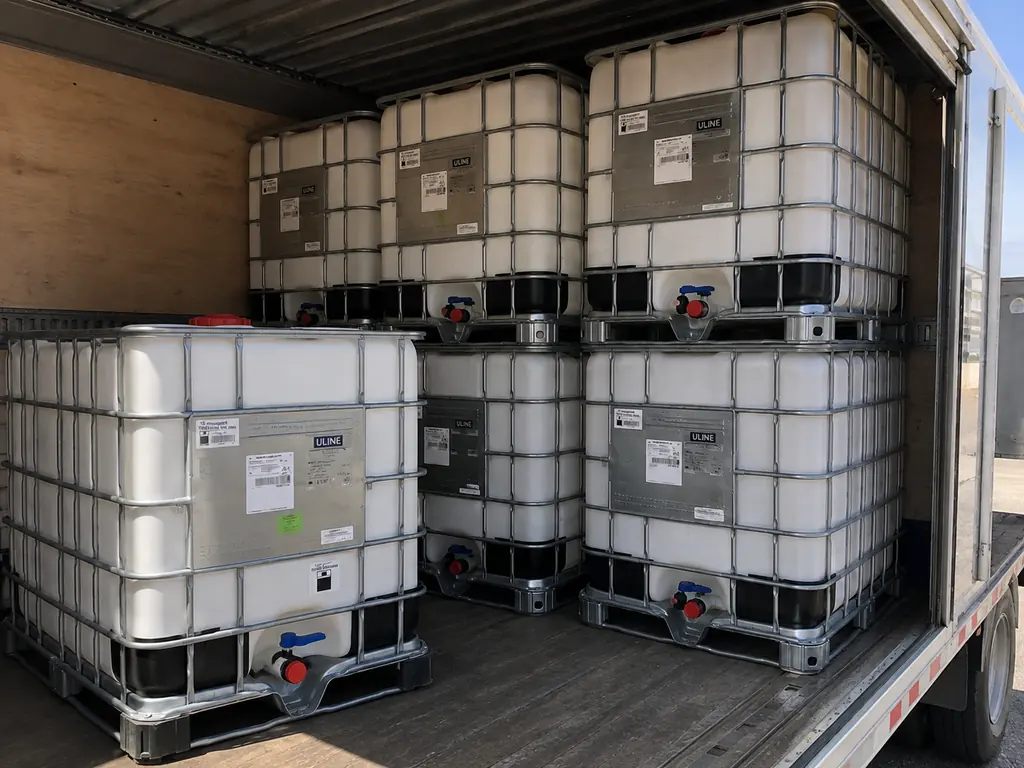
Four to eight service lives is normal with proper reconditioning between them, and the cage will often see more than that across several bottles. The limit in practice is almost never the material — it is whether somebody bothers to route the container back into the system.
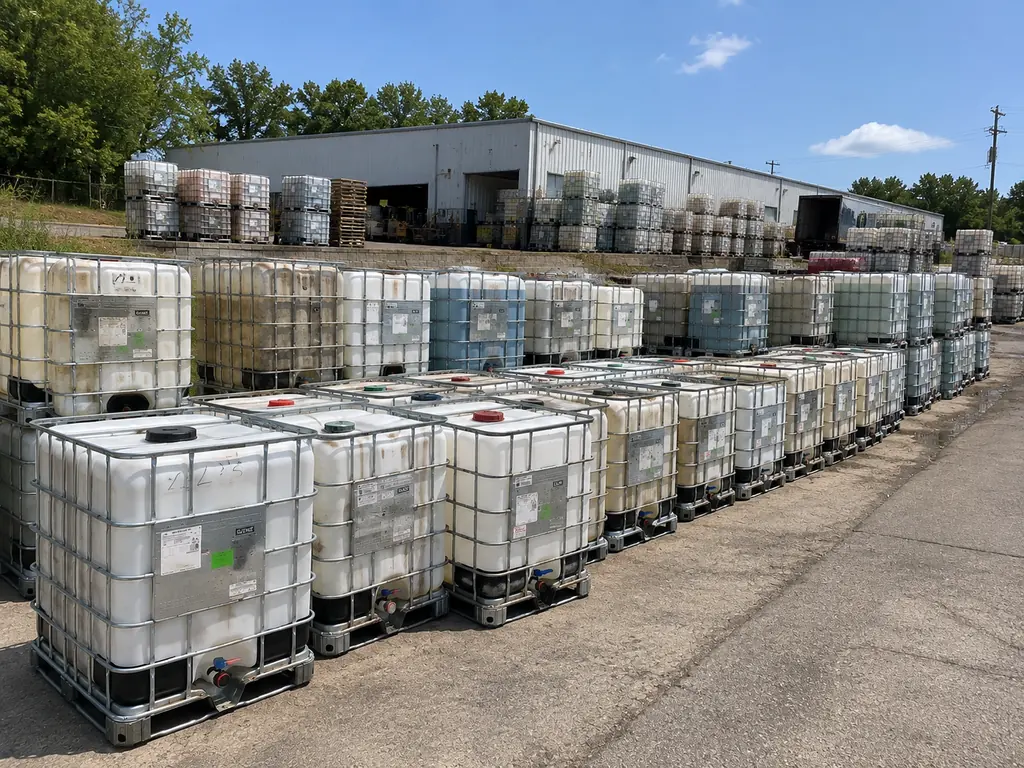
Yes, genuinely. HDPE from totes is a clean single-polymer stream with a real market in pipe, pallet and drainage manufacture, and galvanised steel is standard EAF feedstock. It works — it is simply six times worse than washing the container and using it again.
Write on it. A permanent label naming the last product turns an unknown-history C-grade container into a documented B or A, which roughly triples its value and doubles its remaining lives. It costs nothing and almost nobody does it.
»Keep reading
Diversion tonnage and the calculator behind it.
What we measure and what we refuse to claim.
Where the 96 % actually goes.
One form, one human, one written quote. Totes to buy, totes to sell, a wash job, a recycling pickup — it all starts here.