New UN-marked totes
Current marking with test documentation.
Guide · Compliance
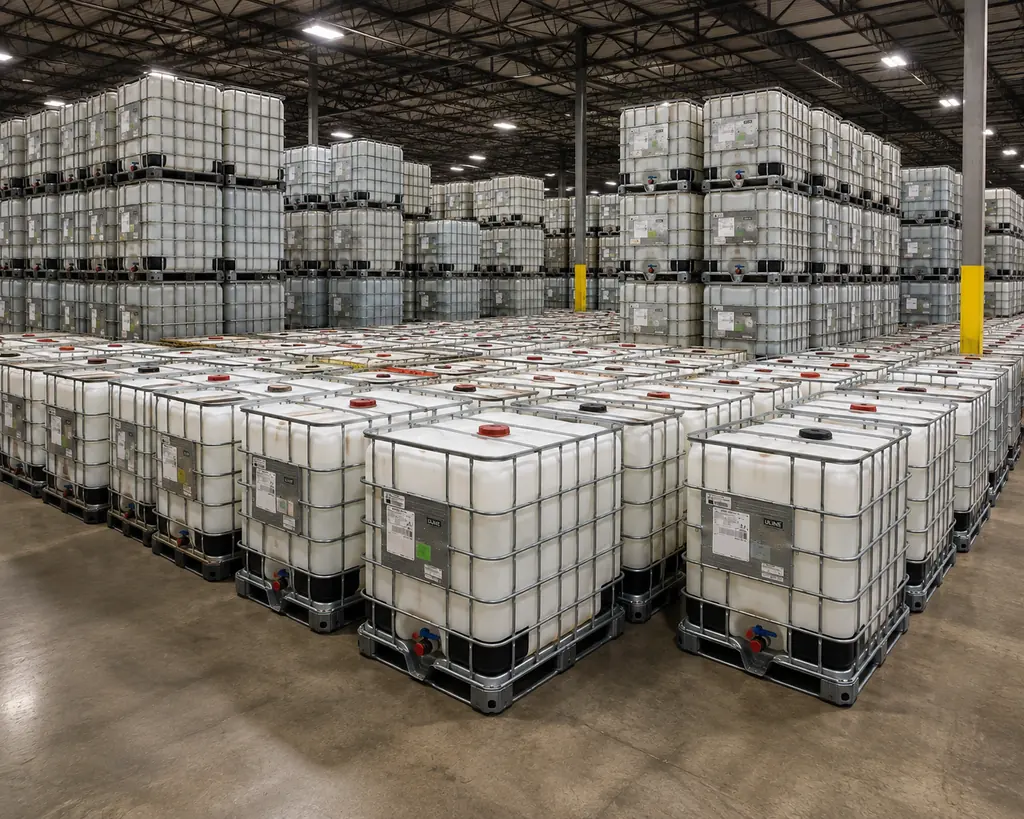
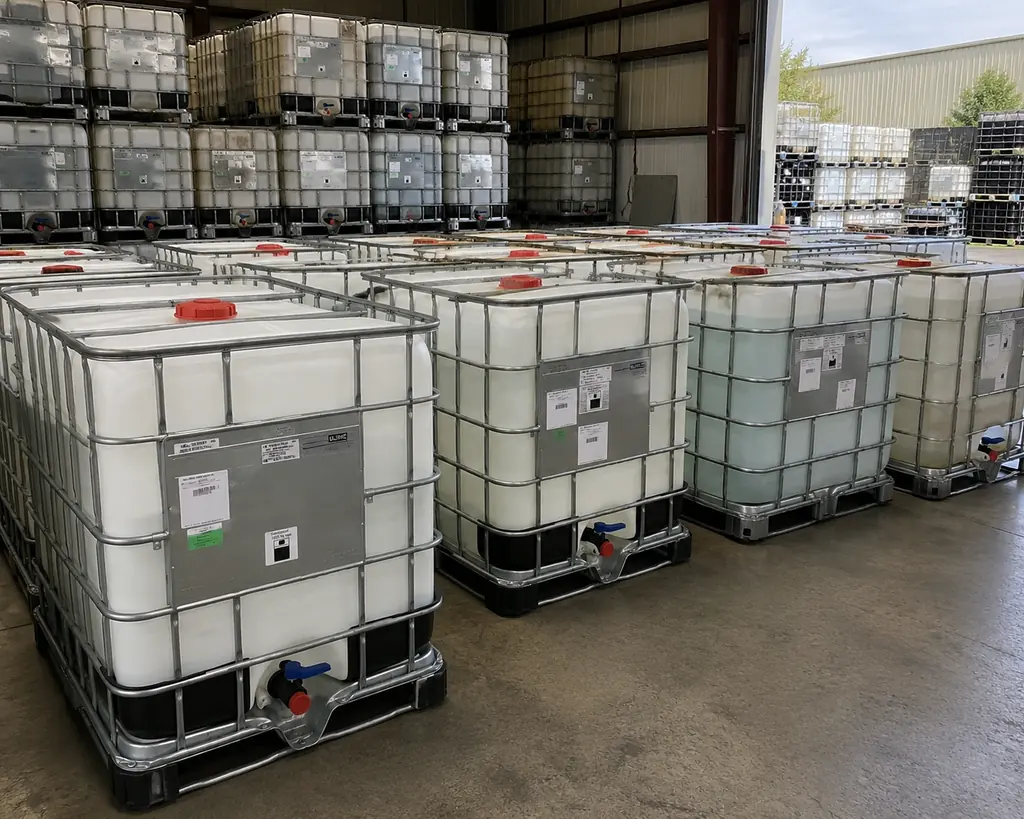
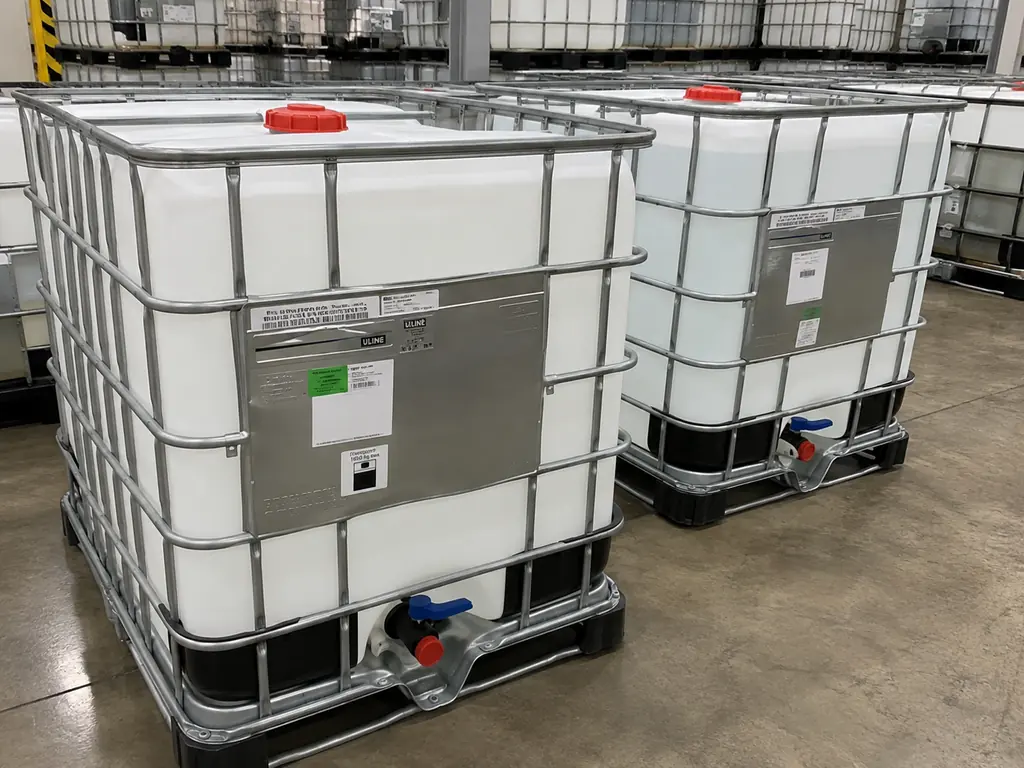
The data plate on the cage is the closest thing an IBC has to a birth certificate. It is worth ninety seconds of your time to learn to read it, because almost nobody in the second-hand trade can.
Order desk
Reading this because you are working something out? Send it over. We answer questions from people who are not buying anything, and we do it in writing.
31HA1 is the UN packaging code for a composite IBC with a rigid plastic inner receptacle and an outer steel frame, intended for liquids and filled or discharged by gravity. The full mark also carries the stacking test load, the maximum gross mass, the hydraulic test pressure, the month and year of manufacture and the manufacturer's identity. A used tote keeps the physical mark, but for regulated transport the certification must be re-established by a competent authority — the plate alone is history, not authorisation.
| Position | Character | Meaning |
|---|---|---|
| 1 | 3 | Intermediate bulk container |
| 2 | 1 | Composite construction (rigid inner in an outer frame) |
| 3 | H | Inner receptacle material: plastics |
| 4 | A | Outer casing material: steel |
| 5 | 1 | For liquids, filled or discharged by gravity |
Variations you will meet on the yard: 31HA2 (liquids, filled or discharged under pressure), 11HA1 (solids, gravity), 31H1 (all-plastic, no outer frame), 31A (all-steel IBC). If the fifth character is a 2, the container was designed for pressurised discharge — that is a genuinely different container and not interchangeable.
This is the part that gets people into trouble. A UN mark certifies a design type as tested at manufacture. Once a container has been in service, the marking on the plate records what it was, not what it currently is. For offering hazardous materials for transport, the operative requirements are periodic inspection and testing, leakproofness testing, and — where the container has been repaired or remanufactured — requalification by a competent authority.
In practical terms: if you are shipping a regulated liquid, buy new or buy from a remanufacturer who will supply current test documentation. If you are storing or using a liquid on your own site, or shipping something non-regulated, the original mark is useful information about the container's design and irrelevant as authorisation.
We say this on every quote where it might apply, and we would rather lose the sale than have a customer discover it during an inspection.
?Common questions
Requalification of IBCs is done by parties registered for it, and it involves inspection and testing to a defined protocol rather than a stamp. We can point you to a registered facility and we will tell you honestly when the economics favour buying new instead — which, for single containers, is most of the time.
Transport regulations tie service life and periodic testing intervals to the date of manufacture on the plate, which is why that date is the first thing to look at on a used container. Check the current requirements for your mode and jurisdiction — the intervals are the sort of thing that gets revised.
Then the container has no provenance for regulated use, full stop. It may be perfectly sound for storage, water, fabrication or non-regulated product. We grade unmarked containers accordingly and price them accordingly.
»Keep reading
Current marking with test documentation.
Every abbreviation on this page, defined.
Stacking loads in practice.
One form, one human, one written quote. Totes to buy, totes to sell, a wash job, a recycling pickup — it all starts here.